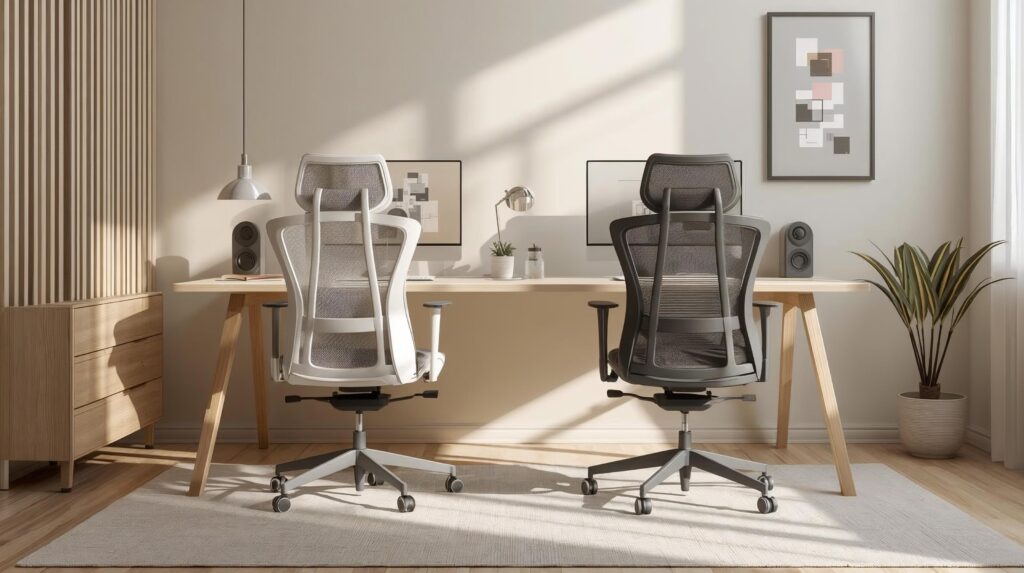
Herman Miller Embody vs Steelcase Gesture is one of the most searched comparisons in premium ergonomic office chairs and for good reason. Both are flagship models built for long work sessions, posture support, and all-day comfort (with premium price tags to match).
Affiliate disclosure: As an Amazon Associate, DeskSetupHub earns from qualifying purchases. If you click an Amazon link and buy, we may earn a commission at no extra cost to you.
At Desk Setup Hub, we focus on practical comfort: back support, adjustability, and how the chair feels after hours of work. This guide breaks down the real differences so you can pick the right chair for your body and your workflow. You can also view our ultimate guide ↗ for home office setup for more insights on setting up comfortable and productive office.
This Herman Miller Embody vs Steelcase Gesture guide is focused on what actually changes your daily comfort.
- Choose the Embody if you want a more posture-driven feel, breathable support, and a chair that encourages subtle movement.
- Choose the Gesture if you want maximum arm adjustability, flexibility for different sitting styles, and strong all-around ergonomics.
Want more options beyond these two? See our best ergonomic chairs for home office list ↗.
At a Glance: Quick Comparison
Here’s the fastest way to decide in the Herman Miller Embody vs Steelcase Gesture debate before we go deep.
| Feature | Herman Miller Embody | Steelcase Gesture |
|---|---|---|
| Best for | Long hours, posture-focused sitting | Maximum adjustability, device-heavy work |
| Back support feel | Responsive, springy support | More “structured” supportive feel |
| Arm adjustments | Highly adjustable (but less fluid) | Among the most adjustable arm systems |
| Seat feel | Supportive, less “cushy” | More traditional cushioned feel |
| Headrest | Typically not included (varies by version/market) | Optional / depends on configuration |
| Warranty | Typically up to 12 years (check region/terms) | Typically up to 12 years (check region/terms) |
- Herman Miller Embody — Check Embody price on Amazon ↗
- Steelcase Gesture — Check Gesture price on Amazon ↗
Note: Warranty, headrest availability, and configurations can vary by country and seller. Always confirm on the official pages linked in the Sources section.
1) Design & Aesthetic
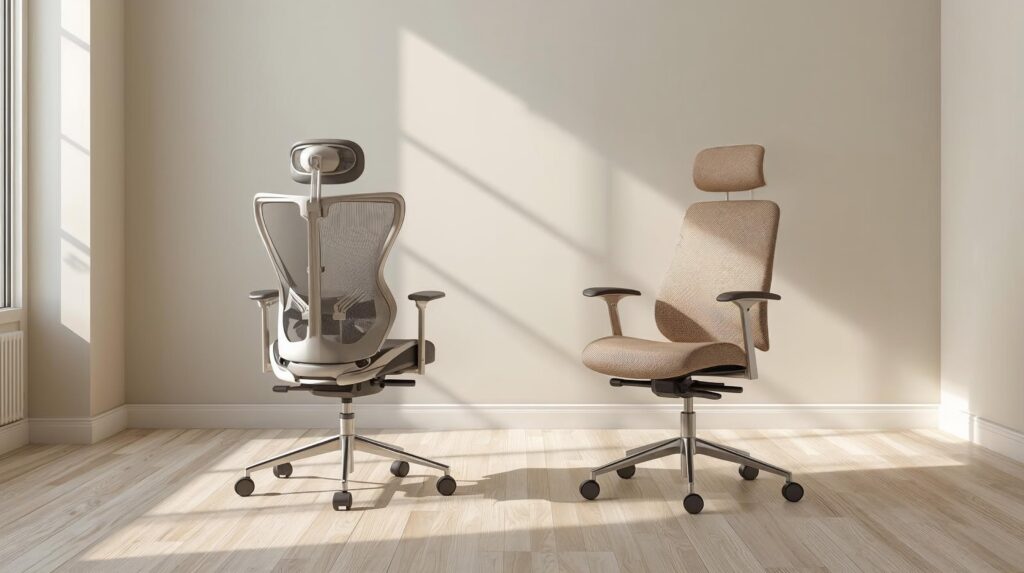
In Herman Miller Embody vs Steelcase Gesture, design matters less than comfort but it affects how the chair fits your workspace.
Herman Miller Embody
The Embody has a bold, design-forward look with a distinctive back structure. If your workspace leans modern and you like gear that stands out, the Embody makes a statement.
Steelcase Gesture
The Gesture looks more traditional and “office professional.” It blends into almost any workspace and tends to look more understated on video calls.
If you care most about:
- Statement design: Embody
- Professional minimal look: Gesture
2) Back Support: Responsive vs Structured
In Herman Miller Embody vs Steelcase Gesture, back support feel is the biggest deciding factor for most people.
Embody back support (responsive feel)
The Embody’s back support is designed to respond to small posture shifts. Many users describe it as a “moving with you” sensation rather than a soft cushion. If you like a chair that encourages active sitting and micro-movement, the Embody usually fits that preference.
Gesture back support (structured feel)
The Gesture’s back support is designed to track your back as you move and recline, giving a more consistent, “supported” sensation. If you prefer a chair that feels steady and secure especially when reclining the Gesture often matches that feel.
If you care most about:
- Micro-movement and responsive support: Embody
- A steady, supportive “hold”: Gesture
3) Armrests: Where Gesture Typically Wins
If you use multiple devices, Herman Miller Embody vs Steelcase Gesture often comes down to arm positioning.
Embody armrests
Embody arms are adjustable, but many users find the adjustments less smooth and less flexible than top-tier alternatives.
Gesture armrests
Gesture is widely known for arm adjustability useful if you switch between keyboard + mouse, laptop, tablet, or phone positions. If arm positioning is a daily pain point (shoulders, neck, forearms), the Gesture’s arms can be a major advantage.
Verdict for armrests: Gesture (for most people)
4) Seat Comfort: Supportive vs Cushioned
Embody seat feel
The Embody tends to feel more “supportive” than “cushy.” It’s designed to keep you supported for long sessions, and many people like it most after a few days of adjustment.
Gesture seat feel
Gesture feels more familiar immediately because it uses a more traditional cushion feel. Some users prefer this right away, especially if they dislike firmer seats.
If you care most about:
- Supportive, posture-driven seat feel: Embody
- Traditional cushioned comfort: Gesture
Pros and Cons
When people compare Herman Miller Embody vs Steelcase Gesture, these pros and cons are usually what makes the decision clear.
Herman Miller Embody
Pros
- Breathable feel and good temperature comfort for long sessions
- Encourages subtle posture shifts (less “locked in”)
- Design-forward aesthetic
- Strong long-term warranty (confirm your region)
Cons
- Arm experience is usually less flexible than Gesture
- Some units can develop noise over time depending on use/environment (varies)
Steelcase Gesture
Pros
- Excellent arm adjustability (great for device-heavy work)
- Works well for people who shift positions often
- More immediately “familiar” cushioned feel
- Strong long-term warranty (confirm your region)
Cons
- Can feel warmer than more breathable designs depending on upholstery
- Back support feel is preference-based (some want more aggressive lumbar)
Fit for Different User Types & Work Styles
| User Type / Work Style | Better Choice |
|---|---|
| You work long hours mostly upright | Embody |
| You switch positions constantly | Gesture |
| You’re device-heavy (laptop + tablet + phone) | Gesture |
| You want a more “active sitting” feel | Embody |
| You want maximum arm positioning control | Gesture |
Final Verdict: Which One Should You Buy?
If you’re still unsure about Herman Miller Embody vs Steelcase Gesture, your best move is to match the chair to how you sit for 6–10 hours a day.
Choose the Herman Miller Embody if you:
- Work long hours daily and want a posture-focused feel
- Prefer a more responsive back support sensation
- Want a design-forward chair that stands out
Choose the Steelcase Gesture if you:
- Constantly change how you sit throughout the day
- Use multiple devices and need arms that adapt
- Prefer a more traditional cushioned seat feel
Bottom line: there isn’t one universal winner only the chair that best matches your posture habits, comfort preference, and device setup.
If you are more inclined to the gaming setup, check our post comparing between Ergonomic Chairs vs Gaming Chairs ↗.
FAQs
Is the Embody better for back pain?
Back pain has many causes, and chair results vary by person. I cannot confirm medical outcomes. What you can do is prioritize fit, adjustability, and proper desk ergonomics.
If lower back comfort is your main priority, start here: ergonomic chairs for lower back pain ↗.
Is the Gesture good for gaming?
It can be, especially if you value arm flexibility and recline comfort. It’s primarily designed for office use, but many people use it for long PC sessions.
Do these chairs require maintenance?
Usually minimal: occasional cleaning and checking adjustments. If you hear noise or feel looseness over time, follow the manufacturer support guidance.
Are cheaper alternatives comparable?
Some chairs offer good ergonomics for less, but these two are premium for materials, adjustability engineering, and long warranty programs. True “1:1” alternatives are uncommon.
Sources & References
- Herman Miller Embody – official product page ↗.
- Herman Miller – Warranty & Service official ↗.
- Steelcase Gesture – official product page ↗.
- Steelcase – Warranty official ↗.